Why Moisture Matters: The Physics of the “Popcorn Effect”
At the heart of moisture-related failures in electronics lies a deceptively simple physical phenomenon: water, when heated beyond its boiling point, expands approximately 1,600 times in volume. In plastic-encapsulated microcircuits (PEMs) which constitute over 95% of commercial ICs ambient moisture slowly diffuses through the mold compound during storage or transit. This moisture accumulates at internal interfaces: between the silicon die and the die-attach material, between the leadframe and the encapsulant, and within micro-voids or delaminated regions. When the component enters a reflow oven (with peak temperatures often exceeding 240°C for lead-free assemblies), this trapped moisture instantly vaporizes. Because the vapor cannot escape quickly enough through the dense polymer matrix, pressure builds rapidly sometimes exceeding 300 psi causing internal fractures, wire bond lift-offs, or catastrophic package cracking. These defects may not be immediately visible but can lead to intermittent electrical failures, reduced thermal performance, or premature wear-out in the field. Crucially, the risk is not limited to high-humidity climates; even moderate ambient conditions (30–60% RH) over weeks or months can saturate moisture-sensitive components, especially those with thin packages, high surface-area-to-volume ratios, or porous mold compounds. This is why moisture control is not optional it is an integral part of process reliability for any surface-mount technology (SMT) assembly line handling modern ICs.
Moisture Sensitivity Levels (MSL): The Foundation of Dry Pack Handling
The industry’s response to this challenge is the **Moisture Sensitivity Level (MSL)** system, standardized in **IPC/JEDEC J-STD-020** (“Moisture/Reflow Sensitivity Classification for Nonhermetic Solid State Surface Mount Devices”). This classification scheme assigns components to one of seven levels (MSL 1 through MSL 6) based on their tolerance to ambient exposure after removal from dry packaging. Each level corresponds to a maximum allowable “floor life” the time a component can remain outside protective packaging before requiring baking or reflow:
- MSL 1: Unlimited floor life at ≤30°C/85% RH. (Typically robust, hermetic, or low-sensitivity parts.)
- MSL 2: 1 year at ≤30°C/60% RH.
- MSL 2a: 4 weeks at ≤30°C/60% RH.
- MSL 3: 168 hours (7 days) at ≤30°C/60% RH.
- MSL 4: 72 hours (3 days) at ≤30°C/60% RH.
- MSL 5: 48 hours (2 days) at ≤30°C/60% RH.
- MSL 5a: 24 hours (1 day) at ≤30°C/60% RH.
- MSL 6: “Time-limited” – must be baked immediately before use; floor life = 0 hours. (Used only with explicit manufacturer approval.)
The MSL rating is determined through a standardized test: components are preconditioned at 125°C to dry them, then exposed to 85°C/85% RH for a defined period, followed by three reflow cycles. If no internal damage (e.g., delamination, wire sweep, or cracks) is observed via acoustic microscopy (SAT) or X-ray, the part passes for that MSL. Crucially, the MSL is not a fixed property it depends on package size, thickness, material composition, and internal geometry. For instance, a 0.5mm-thin QFN may be MSL 3, while an identical die in a 1.0mm package might be MSL 2a. Manufacturers are required to mark MSL on packaging labels and datasheets, and assemblers must honor these classifications to avoid warranty voidance and reliability risks.
How MSL Impacts Manufacturing Workflow
In practice, MSL dictates critical decisions in the SMT line: when to open dry packs, how to track exposure time, and when to intervene with baking. For high-MSL components (e.g., MSL 4–6), even brief exposure during kitting, setup, or changeovers can exceed floor life especially in tropical or uncontrolled factory environments. Many high-mix, low-volume assemblers struggle with this, as partial reels may sit unused for days. Without real-time humidity monitoring and exposure logging, teams risk unknowingly processing “time-bombed” components. This is why modern factories increasingly integrate MSL tracking into their MES (Manufacturing Execution Systems), using barcode scans and environmental sensors to auto-calculate remaining floor life and trigger alerts.
Dry Packing: The First Line of Defense
Dry packing is the industry-standard method for preserving moisture-sensitive components during storage and shipping. Defined in **IPC/JEDEC J-STD-033D** (“Handling, Packing, Shipping and Use of Moisture/Reflow Sensitive Surface-Mount Devices”), dry packing involves sealing components in a moisture barrier bag (MBB) along with desiccant and a humidity indicator card (HIC). This triad forms a closed-loop protection system:
1. Moisture Barrier Bag (MBB)
MBBs are multi-layer laminates (typically PET/AL/PE or NYLON/AL/PE) with extremely low moisture vapor transmission rates (MVTR). Per J-STD-033, acceptable bags must have an MVTR ≤ 0.002 g/100 in²/24h at 38°C/90% RH. The aluminum layer provides the primary moisture barrier, while outer polymer layers offer puncture resistance and printability. Bags are heat-sealed under controlled conditions to ensure hermetic closure. Reusable MBBs must be inspected for pinholes, wrinkles, or seal defects before reuse.
2. Desiccant
Desiccant packets (usually silica gel or molecular sieve) absorb residual moisture inside the bag and any moisture that might ingress over time. The amount of desiccant is calculated based on bag volume, component surface area, and expected storage duration. J-STD-033 provides a formula: Desiccant (units) = [0.33 × Bag Volume (in³) + 0.15 × Component Surface Area (in²)] / 100, where 1 unit = 28.35g of desiccant. Over-drying is not a concern, but insufficient desiccant leads to premature saturation.
3. Humidity Indicator Card (HIC)
The HIC is a chemically treated paper card that changes color (typically blue → pink) at specific relative humidity (RH) thresholds commonly 10%, 20%, and 30% RH. It provides immediate visual confirmation of the internal bag environment. If the 20% spot turns pink upon opening, the contents may have exceeded safe moisture levels and require baking before use. Note: HICs only indicate RH at the card’s location, not the component’s actual moisture content so they are a proxy, not a direct measurement.
Proper dry packing also includes clear labeling: MSL rating, part number, quantity, date sealed, and “Moisture Sensitive Do Not Open Unless Ready for Soldering” warnings. Bags must be stored flat to prevent seal stress and kept away from direct sunlight or heat sources that could degrade barrier properties.
The Baking Process: When and How to Remove Moisture
Baking is the controlled thermal process used to drive out absorbed moisture from components before reflow soldering. It is required when:
- A dry pack is opened and components are not used within their floor life.
- An HIC indicates excessive internal humidity (e.g., 20% spot activated).
- Components are received outside dry packaging (e.g., loose in tubes or trays).
- Components have been exposed to high-humidity environments (e.g., monsoon season, uncontrolled warehouse).
Critically, baking is not a one-size-fits-all procedure. Over-baking can cause oxidation of lead finishes, embrittlement of mold compounds, or damage to humidity-sensitive materials like certain capacitors or displays. Under-baking leaves residual moisture, risking popcorn failures. J-STD-033 provides detailed baking guidelines based on MSL, package thickness, and maximum body temperature (Tb):
Standard Baking Conditions (Per J-STD-033D)
| Package Thickness | Bake Temp | Min. Time (Unsealed) | Min. Time (In Tray/Tube) |
|---|---|---|---|
| ≤ 2.0 mm | 40°C | 192 hrs (8 days) | 240 hrs (10 days) |
| > 2.0 mm and ≤ 4.5 mm | 40°C | 336 hrs (14 days) | 480 hrs (20 days) |
| > 4.5 mm | 40°C | 576 hrs (24 days) | 720 hrs (30 days) |
| Any thickness (if Tb ≥ 90°C) | 90°C | 24 hrs | 48 hrs |
| Any thickness (if Tb ≥ 125°C) | 125°C | 8 hrs | 24 hrs |
Note: Tb = Maximum body temperature the component can withstand without damage. Always consult the manufacturer’s datasheet.
The lower-temperature (40°C) bakes are preferred for most modern components, as they minimize thermal stress and oxidation. However, they require days not hours making them impractical for just-in-time production. Hence, many factories opt for 90°C or 125°C bakes when components allow, drastically reducing cycle time. Vacuum baking (under reduced pressure) can further accelerate moisture removal but is rarely used due to cost and complexity.
Key Baking Best Practices
- Use calibrated, forced-convection ovens: Ensures uniform temperature distribution. Avoid household ovens or non-ventilated chambers.
- Spread components in a single layer: Prevents shadowing and ensures even airflow. Do not stack trays or tubes.
- Monitor internal temperature: Place a thermocouple near components not just rely on oven setpoint.
- Allow slow cooldown: Rapid cooling can re-condense moisture on hot surfaces. Cool inside the oven with power off or in a dry environment.
- Re-dry pack after baking: Baked components must be immediately sealed in a new MBB with fresh desiccant and HIC if not used right away.
Shelf Life, Floor Life, and Exposure Tracking
Managing moisture isn’t just about baking it’s about intelligent time and environment management. Two critical concepts govern this:
Shelf Life
Shelf life is the maximum time a sealed dry pack can be stored before the desiccant saturates or the bag degrades. Per J-STD-033, standard shelf life is **12 months** from seal date when stored at ≤40°C/70% RH. However, this can be extended indefinitely if the HIC shows <10% RH upon inspection. Many manufacturers now print a “Use Before” date on labels, but engineers should verify HIC status before assuming safety.
Floor Life
Floor life begins the moment a dry pack is opened and ends when components are soldered or rebaked. Crucially, floor life is cumulative and humidity-dependent. J-STD-033 provides an optional “floor life extension” method: if ambient conditions are better than 30°C/60% RH (e.g., 25°C/40% RH), floor life can be extended using a correction factor. For example, MSL 3 parts at 25°C/40% RH may get ~240 hours instead of 168 hours. However, this requires continuous environmental monitoring rare in most factories.
Advanced Exposure Tracking
Leading electronics assemblers use digital solutions to manage exposure:
- Barcode/RFID tracking: Scanning a reel upon opening logs time, location, and operator.
- Environmental sensors: Real-time RH/temperature data feeds into exposure calculations.
- Automated alerts: MES systems flag components nearing floor life expiration.
- Blockchain logs: For aerospace/defense, immutable records of handling history.
Without such systems, manual logs on paper or spreadsheets are error-prone and easily falsified posing audit and quality risks.
Common Mistakes and How to Avoid Them
Despite clear standards, moisture-related errors persist across the industry. Here are the most frequent and costly mistakes:
1. Assuming “New Packaging = Dry”
Just because a reel arrives in a sealed bag doesn’t mean it’s dry. Bags can be resealed after exposure, or desiccant may be undersized. Always check the HIC before use.
2. Baking at “Standard” 125°C Without Verifying Tb
Many components especially those with organic substrates, polymer capacitors, or display modules have Tb < 125°C. Baking at 125°C can permanently damage them. Always consult the datasheet.
3. Ignoring Partial Reels
A half-used MSL 4 reel left on a bench for 4 days exceeds its 72-hour floor life. Yet it’s often used anyway “because it looks fine.” Implement strict “open-and-use-or-bake” policies.
4. Using Expired or Reused Desiccant
Desiccant loses capacity over time. Never reuse packets unless regenerated in a dedicated oven (150°C for 2+ hours). Silica gel turns pink when saturated don’t ignore the color.
5. Skipping Baking After Humid Exposure
During monsoon season or in unairconditioned warehouses, components can absorb moisture in hours. Proactive baking even without HIC indication may be warranted in high-risk environments.
Special Cases and Emerging Challenges
Advanced Packaging (2.5D/3D ICs, Fan-Out, SiP)
As packaging evolves, moisture risks increase. 3D-stacked ICs with through-silicon vias (TSVs), fan-out wafer-level packaging (FOWLP), and system-in-package (SiP) modules often have complex internal cavities, thin dies, and multiple material interfaces all prone to delamination under steam pressure. Many advanced packages are MSL 4–6 by default, requiring strict dry handling and often vacuum baking.
Low-Temperature Soldering
New solder alloys (e.g., Sn-Bi, Sn-In) reflow below 200°C, reducing thermal stress but they also reduce the “margin of safety” for moisture. Lower peak temperatures mean less energy to drive out moisture during reflow, making pre-bake even more critical.
Automotive and High-Reliability Applications
AEC-Q100 (automotive) and MIL-PRF-38535 (military) impose stricter moisture controls. Automotive manufacturers often mandate baking for *all* MSL ≥ 2 parts, regardless of floor life, due to 15+ year reliability requirements. Similarly, space and medical devices follow NASA-8739 or ISO 13485 protocols that exceed J-STD-033.
Moisture in Passive Components
While ICs get most attention, passives like MLCCs (multilayer ceramic capacitors) are also vulnerable. Moisture ingress can cause microcracks during reflow, leading to latent shorts. Some high-CV MLCCs now carry MSL ratings and require dry packing.
Future Trends: Smarter, Faster, Greener
The field of moisture management is evolving rapidly:
- Real-Time Moisture Sensors: Embedded RFID tags with humidity sensors can report actual component moisture content eliminating HIC guesswork.
- AI-Powered Exposure Prediction: Machine learning models forecast moisture uptake based on local weather, storage history, and package type.
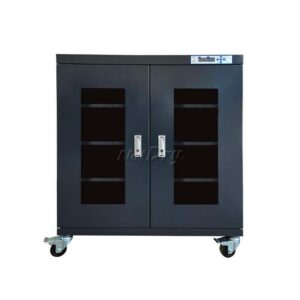
- Dry Cabinets with IoT: Smart dry storage units auto-adjust RH, log access, and integrate with ERP systems.
- Low-Moisture Mold Compounds: New encapsulants with hydrophobic additives reduce diffusion rates, enabling higher MSL ratings.
- Sustainability Focus: Reusable MBBs, regenerable desiccants, and energy-efficient low-temp baking reduce environmental impact.
Frequently Asked Questions (FAQ)
Can I skip baking if my board passed electrical test after reflow?
No. Popcorn damage is often internal and not detectable by electrical testing. Cracks may propagate over time due to thermal cycling, leading to field failures weeks or months later. Baking is a preventive measure not a post-failure diagnostic.
Is dry packing required for MSL 1 components?
No. MSL 1 components have unlimited floor life and do not require dry packing per J-STD-033. However, some manufacturers still dry-pack them for consistency or to protect against other environmental factors (e.g., oxidation).
Can I bake components in their original tape-and-reel?
Yes but only if the carrier tape and cover tape are rated for the bake temperature. Most polycarbonate or polyester tapes tolerate 125°C, but some low-cost materials may warp or outgas. Always verify with the tape supplier.
How do I handle components with conflicting bake requirements?
If a board contains both high-Tb and low-Tb parts, bake at the lowest allowable temperature (e.g., 40°C) for the required duration. Alternatively, pre-bake sensitive components separately before kitting.
Does nitrogen reflow eliminate the need for baking?
No. Nitrogen reduces oxidation but does not remove internal moisture. Steam pressure buildup is a physical not chemical phenomenon. Baking is still required for exposed MSDs, regardless of reflow atmosphere.