

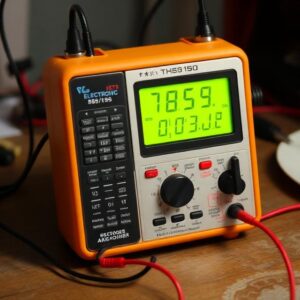
Electronic 85/85 Test
Mastering the Electronic 85/85 Test: Your Guide to Humidity Reliability Picture this: your high-tech gadget humming along perfectly until a
Mastering the Electronic 85/85 Test: Your Guide to Humidity Reliability Picture this: your high-tech gadget humming along perfectly until a

In today’s complex technological ecosystems—spanning cloud infrastructures, industrial control systems, and distributed software applications—failures are not only inevitable but increasingly

High-Temperature Operating Life (HTOL) testing serves as the cornerstone of semiconductor reliability qualification, subjecting integrated circuits to accelerated aging under

In the demanding world of modern electronics where devices must operate reliably in environments ranging from the frozen vacuum of

In the ever-accelerating landscape of electronics design, manufacturing, and repair, functional testing of electronic components has evolved from a simple
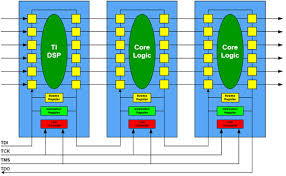
In the intricate ecosystem of modern electronics—where high-speed interfaces, dense packaging, and multi-vendor interoperability are the norm—the electrical and functional

In the digital age, memory components serve as the foundational fabric of virtually every electronic system—from smartphones and laptops to
Electrical testing is the backbone of a safe, legally compliant and reliable electrical installation in any building. A professionally delivered electrical testing test service verifies that wiring, distribution boards, protective devices, and all associated equipment are installed correctly, operate within design limits and remain safe for continued use throughout their lifecycle. Through a structured combination of visual inspection, instrumented tests and detailed reporting, a competent electrical tester can reveal hidden defects, ageing, overloading and non‑compliance issues long before they evolve into electric shocks, fires, costly downtime or legal exposure.
In modern residential, commercial and industrial environments, electrical installations are more complex and more heavily loaded than ever before. That makes periodic testing and inspection not an optional extra, but a vital maintenance and risk‑management discipline. A robust electrical testing regime protects building users, safeguards equipment, underpins insurance coverage and demonstrates that the duty holder is meeting statutory obligations under electrical safety legislation, building regulations and industry codes of practice. When properly scoped and executed, an electrical testing test service becomes a strategic tool that supports asset management, planning of remedial works, and ongoing operational resilience.
An electrical testing test service is a structured, documented process in which a qualified electrician or electrical testing engineer examines and tests an electrical installation or specific electrical equipment to verify its safety, functionality and compliance with applicable standards. In a building context, this service is often formalised as an Electrical Installation Condition Report (EICR) or equivalent, in which each circuit is inspected, tested and assessed as satisfactory or unsatisfactory for continued use. The work typically combines methodical visual inspections with a defined suite of instrumented tests to evaluate insulation quality, earthing and bonding arrangements, fault protection, polarity, continuity and functional performance.
The resulting report forms an authoritative record of the installation’s condition at the time of testing. Defects, deviations from regulations and potential hazards are categorised and prioritised, enabling the duty holder or property owner to schedule remedial works in a risk‑based, cost‑effective way. Over time, repeated testing services create a documented history that supports lifecycle planning, compliance audits and the demonstration of due diligence in the event of incidents or regulatory scrutiny.
The primary objective of any electrical testing test service is to confirm that an installation or item of equipment is safe for continued use until the next scheduled inspection. This involves verifying that fundamental safety principles such as basic insulation, fault protection, earthing and bonding, disconnection times and mechanical integrity are being met consistently across the system. By systematically identifying deterioration, damage, incorrect modifications, overloading and poor workmanship, testing reduces the likelihood of electric shock, burns, arcing faults, fire propagation and damage to connected loads.
A parallel objective is legal and regulatory compliance. Electrical installations are governed by national wiring regulations, building regulations, workplace safety laws and sometimes sector‑specific rules for healthcare, hazardous locations, public venues or data centres. A formal testing service provides evidence that the duty holder has taken reasonable steps to comply with these regimes, thereby reducing liability exposure and satisfying insurers, landlords, tenants, corporate risk managers and enforcement bodies.
Beyond safety and compliance, there are strong operational arguments for investing in regular, high‑quality electrical testing. Testing reveals latent issues such as marginal insulation resistance, high loop impedance, loose terminations or overloaded circuits before they cause unplanned outages, nuisance tripping or catastrophic failure of equipment. This supports a predictive maintenance philosophy, allowing targeted interventions during planned shutdowns instead of emergency call‑outs at premium cost.
In commercial and industrial environments, where downtime is directly linked to lost revenue, the ability to pre‑empt failures can deliver rapid payback. In addition, testing data can be used to optimise capacity planning, identify circuits that require upgrading, and justify capital investment in distribution boards, cable replacements or protective devices. For landlords and property managers, an up‑to‑date test record can be a differentiator in attracting tenants and obtaining favourable insurance terms, while also simplifying handover processes in property sales or lease renewals.
A comprehensive electrical testing test service can be tailored to the specific environment but typically encompasses the main intake and distribution equipment, sub‑boards, final circuits and a representative range of connected loads. In a domestic property, this includes the consumer unit, socket‑outlet circuits, lighting circuits, fixed appliances, earthing system and bonding to gas, water or other services. In commercial and industrial premises, the scope widens to include main switchgear, busbars, rising mains, three‑phase distribution boards, motor control centres, emergency lighting circuits, HVAC plant supplies, data centre power infrastructure, and sometimes specialist systems such as fire alarms, security systems and process control panels.
Portable and transportable equipment can be included as a parallel service through Portable Appliance Testing (PAT), ensuring that plug‑in devices complement, rather than undermine, the safety of the fixed installation. In high‑reliability settings such as hospitals, airports or critical industrial processes, scope can extend to generator and UPS interfaces, changeover gear, earthing grids and bonding networks, in order to validate fault performance and resilience under abnormal conditions.
Electrical testing providers serve a broad client base, ranging from individual homeowners who require an EICR before a property sale, through landlords seeking compliance with tenancy regulations, to large corporations operating multi‑site facilities. Facility management companies often commission periodic testing as part of planned preventative maintenance schedules. Construction firms and electrical contractors use testing services for initial verification of new installations before handover, while industrial clients deploy advanced testing during commissioning, plant shutdowns and condition‑based maintenance campaigns.
Public‑sector organisations, such as schools, hospitals and local authorities, depend on robust testing regimes both to protect vulnerable occupants and to demonstrate adherence to statutory codes. In many jurisdictions, licensing bodies, insurers and fire authorities either mandate or strongly recommend regular testing at intervals determined by occupancy type, risk profile and the nature of the electrical load. A professional testing service is therefore integral to responsible asset stewardship across virtually every sector.
A modern electrical testing test service draws on a hierarchy of complementary test methods. Each method targets a specific safety or performance parameter, and together they provide a rounded picture of the installation’s true condition. While local standards may define terminology and precise procedures, the following test categories are widely used across international practice.
Continuity testing confirms that a conductive path exists where it is supposed to exist, with resistance sufficiently low to support safe and effective operation. In fixed wiring, this is applied to circuit conductors, protective earth conductors and bonding connections. Low‑resistance ohmmeters or multifunction testers inject a small test current between the ends of the conductor under test and measure the resulting voltage drop, calculating resistance by Ohm’s law. Low resistance confirms that joints are mechanically and electrically intact, while abnormally high readings can point to loose terminations, undersized conductors, corrosion or partial breaks that could impair fault‑current flow and compromise protective disconnection times.
Continuity testing is especially important for protective earthing and main and supplementary bonding. These conductors must reliably carry potentially large fault currents without excessive voltage rise or thermal damage. A discontinuity in the earth path can render overcurrent protective devices ineffective under fault conditions, leaving exposed‑conductive‑parts at dangerous touch potentials. For that reason, continuity tests are usually performed early in the test sequence, while circuits remain de‑energised, and repeated if subsequent work may have disturbed connections.
Insulation resistance testing assesses the quality of insulation between live conductors and between live conductors and earth. Dedicated insulation resistance testers apply a DC test voltage, commonly in the hundreds or low thousands of volts, across the insulation system and measure leakage current. High resistance values indicate good insulation, while lower‑than‑expected readings suggest moisture ingress, contamination, mechanical damage, thermal ageing or installation errors such as trapped conductors.
In building wiring, insulation resistance tests help to verify that there are no low‑impedance paths between live conductors and earth that could produce excessive leakage currents, tripping residual current devices or creating fire risks. In rotating machines, transformers and other equipment with more complex insulation systems, trending insulation resistance values over time can reveal gradual deterioration long before outright breakdown occurs. By identifying circuits with marginal insulation, the testing service enables targeted remedial work, such as cable replacement, drying, cleaning or re‑terminations, thereby extending asset life and improving reliability.
Effective earthing (or grounding) is central to electrical safety. It provides a low‑impedance path for fault current and helps stabilise voltage with respect to earth under normal and abnormal conditions. Earth testing evaluates both the resistance of the earthing electrode system and the integrity of connections between equipment and that system. Methods range from simple continuity checks of earthing conductors to more sophisticated earth‑resistance measurements using the fall‑of‑potential method, clamp‑on techniques or stakeless systems.
In the fall‑of‑potential method, a test current is injected between the earth electrode and a remote auxiliary earth, while voltage is measured at graded distances to characterise resistance. Clamp‑on testers can measure earth loop resistance without disconnecting electrodes, useful in multi‑electrode systems where disconnection is impractical. Accurate earth testing ensures that prospective fault currents will be large enough to operate protective devices while keeping touch and step voltages within acceptable limits. It is especially important in installations with long cable runs, outdoor equipment, lightning protection systems or soil conditions that may change seasonally.
Loop impedance testing determines the total impedance of the fault loop path from the source, through the phase conductor, fault point, protective conductor and back to the supply. By measuring loop impedance, testers can calculate prospective short‑circuit current and earth‑fault current at particular points in the installation. These values are essential for verifying that overcurrent protective devices such as circuit breakers and fuses will operate quickly enough under fault conditions to prevent dangerous temperatures and voltages. Excessively high loop impedance can arise from undersized conductors, long cable runs, loose terminations or poor earthing, and often triggers recommendations to uprate or reconfigure affected circuits.
Fault current testing may be performed using dedicated instruments that energise the circuit with a controlled current and infer loop impedance from measured voltage. In critical environments, fault current data supports coordination studies, ensuring that protective devices operate selectively, limiting the scope of any disconnection and preserving supply to unaffected circuits. By combining loop impedance and fault current results with manufacturer’s time‑current characteristics, the testing engineer can confirm that protective schemes are suitably graded and that thermal and mechanical stresses under fault conditions remain within the equipment ratings.
Polarity testing verifies that conductors are correctly identified and connected, ensuring that live, neutral and protective earth conductors terminate in their intended positions at accessories and equipment. In single‑phase systems, it confirms that the live conductor is correctly switched and fused, while neutral remains at or near earth potential. In three‑phase systems, polarity tests confirm phase rotation where necessary for motors and rotating machinery, ensuring the correct direction of rotation and preventing mechanical damage or process disruption.
Incorrect polarity can lead to exposed parts remaining energised when a switch is open, fuses being placed in neutrals instead of lives, or equipment frames unintentionally becoming live. Such errors may not be obvious during normal operation but can present severe electric shock risks during maintenance, fault conditions or emergency isolation. Polarity tests, carried out as part of both initial verification and periodic inspection, act as a final safeguard against dangerous connection errors and are often combined with functional checks of switching devices and isolators.
Residual current devices (RCDs), residual current circuit breakers with overcurrent protection (RCBOs) and other protective devices must operate within strict time and current thresholds to provide shock protection and fire mitigation. RCD testing uses dedicated instruments to apply controlled fault currents and measure trip times at specified test settings, including rated residual current and multiples thereof. The results are compared to standard limits to verify compliance. Where trip times exceed permissible values, the device may require replacement, circuit reconfiguration or investigation of upstream and downstream influences.
Overcurrent protective devices are usually assessed indirectly, through loop impedance and fault current calculations, visual verification of ratings and types, and checks against coordination studies. In some industrial contexts, more advanced testing may be undertaken, including primary injection tests on protective relays, secondary injection on electronic trip units and functional tests of interlocks, shunt‑trips and undervoltage releases. Effective testing of these protective components ensures that the installation responds to faults in a predictable, selective and safe manner, limiting damage and exposure to personnel.
Voltage testing verifies that nominal system voltages are within acceptable tolerances at various points in the installation, under realistic loading conditions. Persistent over‑voltage or under‑voltage can harm equipment, shorten lamp life, reduce motor torque or cause nuisance tripping of protective devices. Load testing, often using clamp meters and power quality analysers, confirms that current draw and demand are within cable and protective device ratings, and highlights circuits operating close to or beyond design capacity. In three‑phase systems, load balancing between phases is evaluated to minimise neutral currents and optimise efficiency.
Functional testing complements these measurements by confirming that circuits and control systems behave as intended under normal and simulated fault conditions. This might include verifying that emergency lighting circuits operate when the normal supply fails, that interlocks prevent hazardous combinations of operations, and that automatic transfer switches, generators and UPS systems start, synchronise and carry load when called upon. Together, voltage, load and functional tests move the focus beyond static safety limits into the realm of real‑world performance and resilience.
In industrial and utility environments, higher‑voltage systems and complex assets such as motors, transformers and switchgear may warrant advanced test techniques beyond the scope of standard building inspections. High‑potential (HiPot) testing, surge testing, partial discharge measurements and advanced insulation diagnostics are used to prove dielectric strength, detect incipient winding faults and quantify ageing in insulation systems. These tests often employ sophisticated equipment and strict safety protocols, as test voltages can significantly exceed normal operating levels.
While such methods are not routinely applied to standard low‑voltage building installations, they become indispensable in high‑reliability or high‑consequence environments. A comprehensive electrical testing service provider may offer these specialised tests as part of motor condition monitoring programmes, factory acceptance testing, commissioning of critical plant and periodic reassessment of key assets whose failure would have disproportionate safety, environmental or financial impacts.
Effective electrical testing begins before any panel is opened or instrument is connected. The testing provider typically conducts a pre‑inspection review of available documentation, including existing drawings, single‑line diagrams, previous test reports, manufacturer’s data and any records of recent modifications or incidents. This stage clarifies the scope, identifies critical circuits, estimates required shutdown windows and highlights special hazards such as live‑working constraints, limited access, high fault levels or the presence of flammable atmospheres.
A formal risk assessment and method statement will address how the work will be carried out safely, including isolation procedures, lock‑out and tag‑out requirements, personal protective equipment, arc‑flash risk controls, safe approach distances and the management of third‑party contractors or building occupants. For complex sites, the plan may include phasing the work to avoid excessive disruption, arranging out‑of‑hours access, or coordinating with building automation teams to prevent unintended system responses during testing.
Visual inspection is the foundation of any electrical testing test service. Before energised measurements are made, the tester systematically examines accessible parts of the installation for signs of damage, overheating, corrosion, contamination, ingress of water or foreign bodies, mechanical stress and non‑compliant workmanship. Items of interest include cracked accessories, discoloured insulation, loose fixings, exposed conductors, overloaded trunking, incorrect cable routing, missing grommets, inappropriate use of flexible cables, and blocked or obstructed distribution boards.
The visual phase also checks for the presence and condition of labels, warning notices, circuit identification, protective conductor markings and the adequacy of access and working space around electrical equipment. Many serious hazards, such as overloaded multi‑way adaptors, poorly secured temporary wiring or compromised enclosures, can be detected at this stage without recourse to test instruments. Findings from the visual inspection guide the subsequent test plan, focusing attention on circuits that show evidence of deterioration or modification.
Dead testing refers to tests conducted with circuits safely isolated and confirmed de‑energised. This phase includes continuity of protective conductors, ring final circuit continuity, insulation resistance and polarity (where feasible without energising). The objective is to demonstrate that conductors are correctly routed and connected, and that insulation between live parts and earth meets or exceeds regulatory thresholds. Because dead tests do not expose the tester to live conductors, they can often be carried out more extensively, providing a baseline of circuit integrity before live tests begin.
Isolation procedures are critical during dead testing. The tester must verify that supplies are genuinely disconnected, typically by operating isolators, testing for absence of voltage with a proving unit and meter, and applying locks and tags to prevent inadvertent reconnection. For large installations, careful coordination is needed to avoid shutting down critical processes unintentionally. The results of dead testing inform decisions about whether circuits are safe to re‑energise for live testing and ongoing operation.
Live testing is performed on circuits that are energised, under strictly controlled conditions. Typical live tests include loop impedance, prospective fault current, RCD trip‑time testing, voltage measurements and functional checks. Because these tests interact with the live system, they must be undertaken by competent personnel following robust safety protocols, including suitable PPE, insulated tools, controlled access to test areas and, where applicable, arc‑flash risk mitigation measures.
The purpose of live testing is to confirm that the installation performs correctly under realistic operating conditions, that protective devices respond as expected, and that voltage and load parameters remain within acceptable boundaries. Any abnormal behaviour observed during live testing, such as unexpected tripping, voltage sag, overheating or harmonic distortion, may prompt more detailed investigation or immediate remedial action in the interests of safety.
Upon completion of inspection and testing, the provider compiles a detailed report or certificate. In many jurisdictions this takes the form of an Electrical Installation Condition Report, which records the extent of the installation covered, test instruments used, environmental conditions, test results for each circuit and a schedule of observed defects or non‑compliances. Each observation is assigned a code that reflects its severity, ranging from items requiring improvement to those that demand urgent remedial measures before the installation can be considered safe.
The report not only provides a snapshot of current condition but also acts as a management tool. It can prioritise remedial works, recommend re‑test intervals based on risk and usage, and highlight areas where documentation or labelling should be improved. For multi‑site operators, standardised reporting formats enable benchmarking between locations, supporting portfolio‑level risk assessments and investment planning. Increasingly, digital reporting platforms allow results to be integrated into maintenance management systems, streamlining the allocation and tracking of corrective actions.
Electrical safety legislation generally imposes duties on employers, landlords, building owners and other responsible persons to ensure that electrical systems are safe, properly maintained and suitable for their intended use. While the precise legal framework varies by jurisdiction, common themes include the duty to prevent danger, the obligation to maintain installations to a safe standard, and the requirement to keep appropriate records that demonstrate compliance. Failure to meet these duties can result in enforcement action, civil liability and in serious cases criminal prosecution.
Electrical testing plays a central role in demonstrating that duty holders have taken reasonable precautions. Periodic inspection reports, certificates of compliance for new or altered installations and documented remedial works form an evidence trail that can be critical in the aftermath of incidents, insurance claims or regulatory audits. For landlords, especially in the residential sector, specific laws may mandate testing at fixed intervals and require that reports be provided to tenants or local authorities.
Wiring regulations define the technical standards for the design, installation and verification of electrical systems. These documents cover topics such as circuit design, selection of protective devices, earthing arrangements, cable routing, environmental influences, fault protection, over‑voltage protection and verification testing. Inspection and testing procedures are usually described in detail, including recommended test sequences, minimum values, acceptable results and guidance on interpreting borderline cases.
Codes of practice, guidance notes and industry best‑practice documents complement formal regulations by offering more detailed explanations, illustrative examples and sector‑specific guidance. Electrical testing service providers must keep abreast of updates to these documents, as regulatory changes may alter acceptable limits, introduce new test requirements or modify reporting conventions. For clients, engaging a provider who is conversant with current standards is essential to ensuring that test results are recognised as valid by regulators, insurers and other stakeholders.
Recommended intervals for periodic inspection and testing vary by installation type, use and environmental conditions. Domestic properties may be advised to undergo full testing at intervals measured in years, while high‑risk environments such as industrial plants, public entertainment venues or locations with corrosive atmospheres may warrant shorter cycles or partial annual reviews. Some regulations specify maximum intervals, while also emphasising that installations should be tested more frequently if risk factors such as heavy loading, frequent alteration, harsh conditions or a history of faults are present.
Many organisations adopt risk‑based scheduling, in which testing frequency is determined by a structured assessment of likelihood and consequences of failure. Critical circuits supplying life‑safety systems, medical equipment or essential production lines may be inspected more frequently than non‑essential outlets in low‑risk offices. A professional testing service can assist clients in defining such strategies, balancing safety, compliance and operational disruption in a way that is tailored to the specific context of each site.
Multimeters and clamp meters are fundamental tools in the tester’s kit. Digital multimeters provide measurements of voltage, current (with suitable accessories), resistance and continuity, and may include additional functions such as capacitance, frequency and temperature. Clamp meters, which measure current via a hinged magnetic core placed around a conductor, enable non‑intrusive current readings without breaking the circuit. These instruments support both basic checks and more advanced diagnostics, such as monitoring load balance, detecting harmonic currents or verifying supply quality at distribution points and loads.
For electrical testing services, instrument selection and maintenance are critical. Testers must ensure that meters possess appropriate safety ratings for the system’s voltage and fault‑level category, and that they are calibrated regularly in accordance with traceable standards. Using unsuitable or poorly maintained instruments can compromise both safety and measurement reliability, undermining the value of the test service.
Dedicated insulation resistance testers and low‑ohm continuity meters are used to perform the core dead tests required for installation verification. Many service providers use multifunction installation testers that combine insulation, continuity, loop impedance, RCD testing and other functions into a single device. These instruments streamline fieldwork, enabling test sequences to be executed efficiently and recorded digitally. Features such as automatic test sequencing, onboard memory, wireless data transfer and integration with reporting software can further improve productivity and reduce transcription errors.
Continuity testers typically deliver relatively high test currents to minimise the effect of contact resistance and provide stable readings in the low‑ohm range. Insulation testers offer multiple test voltages suited to various system voltages and equipment types, with safety interlocks to prevent accidental energisation and to discharge stored energy after testing. Correct configuration and interpretation of these instruments is a core competency for any electrical testing professional.
Earth testers are specialised instruments designed to measure the resistance of earthing electrode systems and, in some cases, the integrity of equipotential bonding. Depending on the method used, they may require auxiliary earth spikes and significant clear ground around the electrode under test. Modern instruments may support multiple techniques, including two‑, three‑ and four‑pole fall‑of‑potential tests, selective testing in multi‑electrode systems and clamp‑on testing where disconnection is impractical.
For large or complex installations, such as substations, data centres or industrial plants with extensive earthing grids, earth testing can be a significant undertaking. Careful planning is necessary to avoid interference from buried metallic structures, neighbouring installations and temporary connections. Experienced providers use a combination of measurement techniques, modelling and historical data to arrive at robust assessments of earthing performance.
Instruments capable of performing loop impedance, prospective fault current and RCD trip‑time testing are central to modern electrical testing services. Many multifunction testers include these capabilities, while some providers deploy dedicated devices for high‑accuracy or specialised applications. Advanced instruments can perform no‑trip loop tests designed to avoid unwanted operation of RCDs while still providing reliable impedance values, particularly useful in sensitive environments.
Power quality analysers extend the tester’s toolkit into the domain of supply performance. These devices record voltage, current, harmonics, flicker, unbalance, transients and events over time, providing deep insight into the electrical environment experienced by equipment. In commercial and industrial settings, power quality studies can be commissioned alongside standard testing to address issues such as unexplained equipment failures, nuisance tripping, overheating of neutrals or compliance with power supply contracts.
Where high‑voltage assets or critical rotating machines are involved, additional diagnostic equipment may be deployed. HiPot testers apply elevated voltages to demonstrate dielectric withstand and identify weak spots in insulation systems. Surge testers assess turn‑to‑turn insulation in motor windings, while partial discharge detectors sense minute discharges within solid or liquid dielectrics that indicate degraded insulation. Thermal imaging cameras can reveal hotspots in connections, busbars and transformers, guiding targeted mechanical inspection.
Such tools require advanced training and a disciplined approach to safety. Their use is often governed by detailed internal procedures and industry guidance documents, and they may be reserved for specialised teams within a broader electrical testing organisation. When used appropriately, they enable proactive interventions that prevent major failures, particularly in assets that are costly to replace or whose failure would cause disproportionate disruption.
Safe isolation is a non‑negotiable aspect of electrical testing. Before any dead testing or intrusive work takes place, circuits must be positively isolated from all sources of supply, including alternative feeds, generators or backfeeds from interconnected systems. Standard practice involves opening isolators, confirming isolation by measurement with an approved test instrument, applying lock‑out devices and tagging them with clear information about the person responsible and the scope of work.
On complex sites, a formal permit‑to‑work system may be used, with defined roles for issuers, acceptors and authorised persons. This structure ensures that the status of circuits and equipment is always known and that re‑energisation cannot occur without proper authorisation and coordination. Failure to adhere to robust isolation and lock‑out/tag‑out practices remains a leading cause of serious electrical incidents, underscoring its central importance in all testing activities.
Electrical testing personnel must be equipped with suitable personal protective equipment (PPE) appropriate to the voltage, fault level and nature of the work. This may include insulating gloves, arc‑rated clothing, eye and face protection, insulating mats, safety footwear and hearing protection where high‑energy switching operations are anticipated. PPE should be seen as the last line of defence, supplementing but not replacing risk elimination and engineering controls.
Safe working practices include maintaining appropriate clearances around live parts, using insulated tools, avoiding lone working for high‑risk tasks, controlling access to test areas and keeping equipment and cables organised to reduce trip hazards. Test leads and probes must be rated for the system category and maintained in good condition, with damaged insulation or loose connections addressed immediately. Regular training and safety briefings help maintain high standards and ensure that safe practices become habitual.
In systems with high fault levels, particularly at low‑voltage switchboards, motor control centres and industrial distribution boards, the risk of arc‑flash must be explicitly considered. Arc‑flash incidents can release intense heat, pressure and light in fractions of a second, causing severe injuries and equipment damage. Risk assessments should estimate potential incident energy levels and define working distances, protective boundaries and appropriate PPE categories for various tasks.
Wherever possible, testing should be organised to minimise live work within arc‑flash boundaries. This may involve using remote test probes, temporarily reducing protective device settings to limit fault energy or scheduling testing during plant outages when equipment can be fully de‑energised. Testing organisations familiar with arc‑flash risk management can assist clients in developing or refining their policies, integrating testing into a coherent overall protective strategy.
Delivering a high‑quality electrical testing test service requires more than familiarity with test instruments. Test personnel must possess a deep understanding of electrical principles, wiring regulations, fault behaviour, protective coordination and risk assessment. They must be able to interpret test results in context, distinguishing between harmless anomalies, borderline conditions and genuinely dangerous defects that require immediate action. Competence also encompasses practical skills such as safe panel access, systematic documentation and effective communication with clients and other trades.
In many jurisdictions, minimum qualifications are defined in regulations, industry schemes or professional standards. These may include formal electrical apprenticeships, technical diplomas, dedicated inspection and testing certifications and, for high‑voltage work, specialised endorsements. Continuing professional development is essential, as standards, technologies and best practices evolve over time. Clients should expect their chosen provider to demonstrate clear competence pathways, documented training programmes and appropriate supervision structures.
Many reputable electrical testing organisations participate in third‑party certification or accreditation schemes. These may relate to specific standards for testing laboratories, quality management systems, safety management or sector‑specific requirements such as data centre or healthcare compliance. Accreditation provides reassurance that the organisation’s processes, calibration regimes, documentation controls and staff training meet recognised benchmarks.
Internally, robust quality systems support consistency and reliability. Standardised test procedures, checklists, instrument management systems and peer‑review of reports help reduce the risk of omissions or errors. Root‑cause analysis of any incidents, near‑misses or customer complaints feeds back into continual improvement, ensuring that the service evolves to meet emerging risks and expectations.
Choosing the right provider is a strategic decision, especially for organisations responsible for multiple or high‑risk sites. Critical selection criteria include demonstrable competence and qualifications of test engineers, membership of relevant professional bodies or accreditation schemes, breadth of services offered, and a track record of delivering work in similar environments. References and case studies can provide insight into how the provider performs under real‑world constraints such as limited shutdown windows, complex logistics or sensitive occupancies.
Prospective clients should also consider the provider’s approach to safety, including their documented procedures, incident history, and readiness to integrate with the client’s own safety systems and permit‑to‑work regimes. The quality and clarity of sample reports, including how defects are coded and prioritised, can make a significant difference to the usefulness of the service. Finally, the ability to offer flexible scheduling, clear pricing structures and long‑term partnership support is often as important as day‑rate comparisons.
A well‑structured proposal phase helps ensure that both parties share a common understanding of scope, expectations and constraints. The provider should offer a clear breakdown of the areas and circuits to be tested, the standards to be applied, assumptions about documentation availability, anticipated shutdown requirements and any exclusions or limitations. For large or complex sites, a preliminary survey visit may be appropriate to validate assumptions and identify logistical challenges.
Service level agreements can formalise arrangements for response times, out‑of‑hours work, emergency call‑outs, data retention and reporting formats. For multi‑year programmes, agreements may incorporate phased testing across different zones or buildings, integration with capital works and joint planning for remedial projects. By investing time in scoping and agreement, both client and provider can avoid misunderstandings and ensure that testing activities deliver the intended safety and business outcomes.
Rather than treating periodic electrical testing as a stand‑alone compliance exercise, leading organisations integrate it into broader maintenance, reliability and asset‑management strategies. Test results inform risk registers, maintenance plans and investment decisions, forming a feedback loop that continually improves system robustness. Circuits or assets that repeatedly show marginal results or recurring defects may be earmarked for redesign, replacement or enhanced monitoring.
Over time, patterns in testing data can reveal underlying systemic issues, such as consistently high loading in particular zones, environmental conditions that accelerate deterioration, or design assumptions that no longer reflect actual usage. Addressing these root causes often yields greater improvements in safety and reliability than repeatedly remedying individual symptoms. The electrical testing service thus becomes a source of actionable intelligence rather than a mere checkbox in a compliance schedule.
The increasing digitisation of testing processes opens new possibilities for data‑driven asset management. Test instruments that automatically upload results to central databases, combined with computerised maintenance management systems, enable sophisticated analytics such as trend analysis, benchmarking across sites and predictive modelling. Integration with building management systems and smart meters extends visibility, allowing near‑real‑time monitoring of load profiles, power quality and equipment status.
Some organisations use the insights from digital records to refine test intervals, focusing resources on circuits showing signs of stress or degradation while extending intervals where evidence supports lower risk. Remote monitoring systems can complement traditional testing, providing continuous oversight of critical parameters and triggering targeted on‑site inspections when anomalies are detected. In this way, the electrical testing test service evolves from an episodic activity into a continuous, intelligent guardian of electrical safety and performance.
A typical service includes pre‑inspection planning, visual inspection of the installation, dead tests such as continuity, insulation resistance and polarity, live tests including loop impedance, fault current and RCD performance, functional testing of key circuits and equipment, and the production of a detailed report or Electrical Installation Condition Report with coded observations and recommendations for remedial work. The exact scope is tailored to the installation type, regulatory requirements and client objectives.
Recommended intervals depend on the type, usage and risk profile of the installation, as defined by applicable wiring regulations and local legislation. Domestic properties may be tested at relatively long intervals or at key lifecycle events such as sale or change of occupancy, while commercial, industrial and public buildings often follow shorter cycles. High‑risk or high‑reliability environments may require more frequent inspections or partial annual testing of critical circuits. A professional testing provider can help define an appropriate schedule based on regulatory guidance and site‑specific factors.
Some level of disruption is usually unavoidable, as circuits may need to be isolated temporarily for safe testing. However, experienced providers work closely with clients to minimise impact, for example by scheduling work outside core hours, phasing testing by area or floor, coordinating with production or IT teams, and using test methods that reduce downtime where feasible. Advance planning and clear communication are key to keeping operations running smoothly while maintaining safety and compliance.
If tests reveal defects or non‑compliances, these will be recorded in the report, usually with a code indicating severity and urgency. Items that present immediate danger may require circuits to be taken out of service until remedial work is completed. Less critical issues will be accompanied by recommendations and, where possible, prioritisation, allowing you to plan corrective actions in a controlled, budgeted manner. Once remedial work is finished, follow‑up testing may be performed to verify that the issues have been resolved.
In many jurisdictions, periodic inspection and testing is explicitly required for certain types of premises, such as rental properties, workplaces and public buildings, while in others the law requires installations to be maintained in a safe condition, with testing recognised as the primary means of demonstrating compliance. Even where not strictly mandated, insurers, licensing bodies or contractual arrangements may make regular testing a condition of cover or operation. It is advisable to consult local regulations and industry‑specific rules to understand your specific obligations.
Look for providers whose engineers hold relevant inspection and testing qualifications, who can demonstrate up‑to‑date knowledge of current wiring regulations, and who participate in recognised certification or accreditation schemes. Ask for sample reports, references from similar clients, evidence of calibrated test equipment and clear statements of their safety procedures. A credible provider will be willing to discuss their methodology, explain how they prioritise findings, and work with you to develop a testing plan that aligns with your operational needs and risk profile.
An Electrical Installation Condition Report (EICR) relates to the fixed wiring of a building, including circuits, distribution boards and permanently connected equipment. It assesses the underlying electrical infrastructure for safety and compliance. Portable Appliance Testing (PAT) focuses on movable electrical appliances that connect to the installation via plugs and sockets, such as office equipment, tools and kitchen devices. Both contribute to overall electrical safety, but they address different parts of the system and are performed using different methods and criteria.
Basic checks, such as operating test buttons on RCDs or visually identifying obvious damage, can be carried out by informed users. However, formal inspection and testing of fixed installations requires specialised knowledge, experience and calibrated instruments. Incorrect testing can miss serious hazards or even introduce new risks. For that reason, regulations and good practice generally require that such work be undertaken by competent, suitably qualified persons. For most owners and duty holders, engaging a professional electrical testing service is the safest and most reliable approach.