

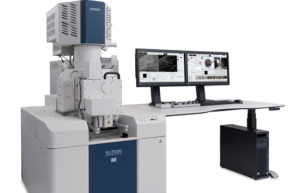
Scanning Electron Microscope Test
The Scanning Electron Microscope (SEM) has revolutionized the way scientists, engineers, and quality assurance specialists visualize and analyze materials at
The Scanning Electron Microscope (SEM) has revolutionized the way scientists, engineers, and quality assurance specialists visualize and analyze materials at

Energy Dispersive X-Ray Spectroscopy (EDS or EDX) stands as one of the most powerful and widely used analytical techniques in

Spectroscopy (EDX) Testing: Elemental Analysis for Electronics Reliability & Quality In electronics manufacturing and failure analysis, seeing isn’t always enough.
In an era defined by globalized supply chains, geopolitical tensions, and escalating demand for electronic systems in life-critical applications—from pacemakers and aircraft avionics to defense radars and autonomous vehicles—the integrity of every resistor, capacitor, and integrated circuit has never been more paramount. Yet, the electronics industry faces a persistent and growing threat: counterfeit electronic components. These fraudulent parts—ranging from recycled, remarked, or cloned devices to out-of-specification rejects fraudulently labeled as genuine—have infiltrated supply chains across aerospace, defense, medical, automotive, and industrial sectors, causing system failures, safety hazards, financial losses, and reputational damage. The U.S. Department of Defense estimates that counterfeit parts cost the defense sector alone over $1 billion annually, while industry-wide losses exceed $75 billion. In response, **electronic component authentication testing** has emerged as a rigorous, multi-layered discipline that combines visual inspection, parametric verification, advanced materials analysis, and forensic techniques to definitively distinguish authentic components from sophisticated counterfeits. This in-depth guide explores the origins and types of counterfeit components, the full spectrum of authentication methodologies, international standards and regulatory frameworks, industry-specific protocols, real-world case studies, and best practices for building a robust anti-counterfeiting strategy. Whether you are a procurement manager, quality engineer, design architect, or regulatory compliance officer, this article provides the knowledge and tools necessary to safeguard your products, your customers, and your organization’s integrity in an increasingly vulnerable supply ecosystem.
Counterfeit electronic components are not mere imitations; they are often dangerous deceptions that masquerade as trusted, certified parts from reputable manufacturers like Texas Instruments, Intel, Analog Devices, or Infineon. The problem stems from multiple vectors: the obsolescence of legacy components (creating scarcity), extended lead times during chip shortages, cost pressures driving buyers to non-authorized distributors, and the sophistication of modern remarking and cloning operations. Unlike simple knockoffs, today’s counterfeits can be nearly indistinguishable to the untrained eye—featuring correct logos, date codes, and even functional behavior under basic testing. However, beneath the surface, they may suffer from latent defects: recycled parts pulled from e-waste with degraded bond wires, sandmarked and remarked units with altered speed grades, or cloned ICs with unverified firmware that fails under thermal stress or high-frequency operation. The consequences are severe: in 2011, the U.S. Senate Armed Services Committee identified over 1,800 cases of counterfeit parts in military systems, including fake transistors in missile guidance systems. In the medical field, counterfeit sensors or power regulators could cause device malfunction during surgery. In automotive electronics, a cloned microcontroller might fail to trigger airbags during a collision. These risks have transformed component authentication from a niche quality check into a mission-critical engineering and compliance function.
One of the most common counterfeit types involves components salvaged from discarded electronics (e-waste). These parts are cleaned, tested for basic functionality, and remarket as “new.” While they may pass simple continuity or parametric checks, they have already endured unknown hours of operation, thermal cycles, and potential electrostatic discharge (ESD) events. Internal bond wires may be fatigued, encapsulants may be cracked, and solder terminations may be oxidized. Under operational stress—such as high current or temperature—they are prone to premature failure. Authentication testing often reveals telltale signs: inconsistent surface oxidation, residual flux or conformal coating, or mismatched lot/date codes when compared to manufacturer records.
Here, lower-grade or obsolete components are physically altered to appear as higher-performance or current-generation parts. For example, a 100 MHz microcontroller may be sanded down and relabeled as a 200 MHz version. The markings are often applied using laser engraving or inkjet printing that mimics OEM typography. While the die may be genuine, its performance envelope is exceeded, leading to timing errors or thermal runaway. Advanced authentication includes decapsulation to inspect the die for original markings, or X-ray fluorescence (XRF) to detect underlying ink layers or surface texture anomalies from sanding.
With access to reverse-engineering tools, counterfeiters can produce near-exact physical and electrical replicas of popular ICs. These clones may function adequately in benign conditions but lack the rigorous process control, material purity, and reliability testing of authentic parts. Firmware may be copied but not validated, leading to security vulnerabilities or functional gaps. Authentication requires deep-level analysis: comparing bond wire geometry via X-ray, verifying package mold compound composition using FTIR (Fourier Transform Infrared Spectroscopy), or executing comprehensive functional test vectors that expose subtle timing or electrical deviations.
During semiconductor manufacturing, a significant percentage of dies fail final test and are scrapped. Unscrupulous brokers may acquire these rejects and sell them as functional parts. While they may power up, they operate outside guaranteed specifications—exhibiting higher leakage current, lower gain, or marginal timing. Authentication involves full parametric and functional testing across temperature and voltage extremes, far beyond nominal conditions, to expose these latent failures.
Authentication testing is not a single test but a tiered, risk-based approach that escalates from non-destructive screening to destructive analysis based on suspicion level, component criticality, and regulatory requirements. The goal is to verify four key attributes: (1) **Authenticity**—is the part from the declared manufacturer? (2) **Conformance**—does it meet the stated specifications? (3) **Condition**—is it new, unused, and free from damage? and (4) **Traceability**—can its provenance be verified through authorized channels? This multi-stage methodology ensures that high-risk components receive the most rigorous scrutiny while maintaining cost efficiency for low-risk items.
The first line of defense involves high-magnification optical inspection (10x–100x) using stereo microscopes to assess package integrity, marking quality, lead finish, and surface condition. Authentic components exhibit consistent font style, depth, and alignment of laser markings; uniform plating without pitting or discoloration; and clean, undamaged leads. Red flags include: sanding marks, ink smudging, inconsistent date codes, or mismatched lot numbers across a batch. Standards like SAE AS6081 and IDEA-STD-1010 provide detailed visual criteria for over 50 defect types, serving as the foundation for inspector training and pass/fail decisions.
X-ray imaging non-destructively reveals internal structures: die size, bond wire count and geometry, paddle design, and internal voids. Authentic parts from a given manufacturer and date code exhibit consistent internal architectures. Counterfeits often show anomalies: missing or extra bond wires, die size mismatches, or irregular mold compound fill. 3D computed tomography (CT) scanning provides volumetric data, enabling virtual cross-sections and precise dimensional analysis—critical for detecting cloned or recycled parts with internal damage.
SAM uses high-frequency ultrasound to detect delamination, cracks, or voids within plastic encapsulants or between die and substrate. Recycled parts often exhibit internal delamination from thermal stress during prior use. SAM is highly sensitive to interfacial defects that X-ray cannot see, making it indispensable for high-reliability applications like aerospace and medical implants.
Beyond basic parametric checks (resistance, capacitance), comprehensive authentication includes full functional validation under worst-case conditions. For an op-amp, this means testing gain bandwidth, slew rate, and input offset voltage across temperature. For a microcontroller, it involves executing firmware-based test vectors that exercise all peripherals and communication protocols. Deviations—even within nominal datasheet limits—can indicate cloned or degraded parts. Automated test equipment (ATE) with high coverage is essential for consistency.
Decapsulation removes the plastic or ceramic package to expose the silicon die for direct inspection. Chemical decapsulation (using fuming nitric acid or sulfuric-peroxide mixtures) is common for plastic packages, while mechanical grinding or plasma etching is used for ceramics. Once exposed, the die markings, layout geometry, and bond pad configuration are compared against authentic reference samples. Cloned dies often show layout discrepancies, while remarked parts retain original die markings that contradict the package label.
Fourier Transform Infrared Spectroscopy (FTIR) identifies organic compounds in mold compounds, conformal coatings, or adhesives. Authentic manufacturers use proprietary formulations; counterfeits often use generic or mismatched materials. X-Ray Fluorescence (XRF) analyzes the elemental composition of lead finishes, verifying RoHS compliance and detecting unexpected alloys. Scanning Electron Microscopy with Energy Dispersive X-ray Spectroscopy (SEM-EDS) provides micro-scale elemental mapping of bond wires, die metallization, and package layers, revealing material substitutions or contamination.
For suspected clones, advanced labs perform die delayering—using plasma etching or chemical stripping—to expose successive metal and polysilicon layers. High-resolution imaging then allows comparison of circuit layout against known-good designs. Even minor deviations in transistor placement or interconnect routing can confirm unauthorized replication. This technique is resource-intensive but definitive for high-value or security-critical components.
Authentication testing is governed by a robust ecosystem of standards. SAE AS6081 (Fraudulent/Counterfeit Electronic Parts: Avoidance, Detection, Mitigation, and Disposition) is the cornerstone for aerospace and defense, mandating risk-based inspection, testing, and traceability. AS6171 details test methods for suspect/counterfeit parts, including SAM, X-ray, decap, and electrical tests. In the commercial sector, IDEA-STD-1010 (from the Independent Distributors of Electronics Associations) provides visual and mechanical inspection criteria. For automotive, AEC-Q100 includes anti-counterfeiting provisions via authorized distribution channels. The U.S. National Defense Authorization Act (NDAA) requires DoD contractors to implement counterfeit avoidance programs per AS6081, with documentation auditable by the Defense Contract Management Agency (DCMA). Compliance is not optional—it is a contractual and legal obligation.
Organizations must adopt a holistic strategy: (1) **Source exclusively from authorized distributors** (e.g., Digi-Key, Mouser, Avnet) or franchised suppliers; (2) **Implement risk-based screening**—high-criticality or obsolete parts receive full authentication; (3) **Maintain a counterfeit parts database** to share findings across the industry; (4) **Train procurement and quality staff** on red flags and standards; and (5) **Partner with accredited third-party labs** for advanced testing. A robust program reduces risk while maintaining supply chain agility.
Counterfeit detection is a reactive process focused on identifying known fraudulent parts. Authentication testing is proactive and comprehensive—it verifies that a component is genuine, conformant, new, and traceable, regardless of prior suspicion. Authentication is about proving legitimacy, not just spotting fakes.
Absolutely. Many counterfeits—especially recycled or remarked parts—function correctly under nominal conditions but fail under stress (temperature, voltage, frequency). Basic multimeter or LCR tests cannot detect internal damage, material substitutions, or latent reliability issues. Only full-spectrum authentication testing reveals these hidden risks.
Costs vary by component complexity and test depth. Visual inspection: $10–$50/part. X-ray/SAM: $50–$150. Full destructive analysis (decap, FTIR, SEM): $300–$1,000+. While significant, these costs are trivial compared to the millions lost in a field recall or safety incident. Many labs offer batch pricing or subscription models for high-volume users.
Yes. Look for labs accredited to ISO/IEC 17025 with specific scope for AS6081/AS6171 testing. Organizations like the Defense Logistics Agency (DLA) and NASA maintain lists of approved labs. Certification ensures technical competence, measurement traceability, and auditable procedures.
Larger OEMs (e.g., Boeing, GE Healthcare) maintain internal labs for high-volume screening. However, advanced techniques like decapsulation, SAM, and SEM-EDS require specialized equipment and expertise. Most companies partner with third-party labs for destructive or complex analyses while performing basic visual and electrical checks in-house.
Electronic component authentication testing is no longer a luxury—it is a necessity in a world where a single counterfeit part can compromise an entire system. By understanding the threats, leveraging standardized methods, and implementing a risk-based program, organizations can ensure the integrity of their electronics, protect their customers, and uphold their commitment to quality and safety.