What is Electronic Highly Accelerated Life Test (HALT)?
The Electronic Highly Accelerated Life Test (HALT) is a rigorous, qualitative stress-testing protocol specifically tailored for electronic hardware, designed to identify design and process weaknesses by subjecting prototypes to multifaceted environmental extremes well beyond operational specifications. Conducted in specialized HALT chambers equipped with liquid nitrogen cooling for temperatures as low as -100°C and high-powered heaters reaching up to 200°C, alongside six-degree-of-freedom random vibration up to 50gRMS, the process systematically ramps stressors in stepwise increments until functional failures occur. These failures, which might include solder joint cracks, component delamination, or firmware glitches triggered by thermal expansion mismatches, are meticulously logged and analyzed using high-speed cameras, thermocouples, and strain gauges to pinpoint root causes. Unlike quantitative accelerated life tests that predict mean time between failures (MTBF) through statistical models like Arrhenius or Weibull distributions, HALT focuses on discovery rather than prediction, aiming to “shake, bake, and break” the unit to expose vulnerabilities that statistical methods might overlook. This methodology, pioneered in the 1980s by Dr. Gregg Hobbs for military electronics and later adapted for commercial applications, has become an industry standard endorsed by organizations like JEDEC and IPC, proving its efficacy in elevating product reliability margins by factors of 10x or more.
Core Principles Behind HALT for Electronics
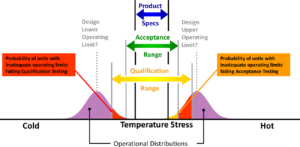
At its heart, HALT operates on the principle of stressing electronic assemblies to their operational limits and beyond, leveraging the physics of failure to accelerate defect manifestation. Key tenets include precipitation testing, where stressors are increased until failure, followed by dissection to repair and retest, ensuring each iteration pushes the product’s weak links to the forefront. For electronics, this means accounting for phenomena like electromigration in ICs under vibration-thermal combos, piezoelectric effects in capacitors, or latent defects in PCBs from manufacturing variances. The process adheres to a structured sequence—starting with low-level combined temperature and vibration, then isolating individual stressors like rapid thermal ramps at 20°C/min or higher—to isolate failure modes systematically. By combining these with electrical monitoring for parametric drifts, HALT provides a holistic view of system resilience, distinguishing between design marginalities and manufacturing defects, thereby guiding targeted enhancements in materials, layouts, or processes.
HALT Chamber Specifications and Setup
HALT chambers for electronic testing are engineering marvels, typically featuring a 1-2 cubic meter test volume with independent control over temperature (-100°C to +200°C), vibration (up to 60gRMS across 5-2000Hz), and often humidity or altitude simulation. Equipped with pneumatic hammers for repetitive shock and high-resolution data acquisition systems logging thousands of channels per second, these setups demand precise calibration to ASTM and ESA standards. For electronic units under test (UUTs), fixturing is critical—using low-mass, rigid mounts to transmit vibrations faithfully while allowing multi-axis motion. Safety interlocks prevent overstress on personnel, and nitrogen purging mitigates condensation risks during cold ramps, ensuring repeatable, artifact-free results that translate directly to design actions.
Step-by-Step HALT Testing Procedure
- Pre-test screening: Functional checkout and baseline characterization of the electronic UUT.
- Combined temperature-vibration screening: Ramp stressors to operational limits (OL), then product limits (PL), and operational extreme limits (OEL).
- Failure isolation: Diagnose, repair, and retest to raise limits iteratively.
- Individual stressor deep dives: Max cold/hot, vibration, and rapid change rates.
- Post-HALT validation: Essence testing on production units to confirm design fixes.
Benefits of HALT in Electronic Product Development
Implementing HALT in electronic product lifecycles yields transformative advantages, slashing development costs by identifying flaws pre-production and compressing timelines from years to months through accelerated discovery. Reliability engineers report up to 90% reduction in field failure rates, as HALT-induced fixes address root causes like marginal trace routing or under-specced passives that conventional tests miss. In high-volume sectors like consumer electronics, this translates to millions in savings on RMA processing, while for safety-critical applications such as EV battery management systems or avionics, it ensures compliance with DO-160 or MIL-STD-810 mandates. Moreover, HALT fosters innovation by quantifying robustness margins, empowering designers to optimize for weight, power, and cost without sacrificing durability, and providing empirical data for robust design methodologies like DFMEA integration.
HALT vs. Traditional Reliability Tests
While highly accelerated stress screening (HASS) follows HALT for production lots, and accelerated life tests (ALT) use milder stressors for MTBF extrapolation, HALT stands out for its qualitative depth on prototypes. ALT might run at 125°C for 1000 hours to simulate 10 years, but HALT reveals the same failure in hours via 10x extremes, making it ideal for design validation rather than qualification.
Real-World Applications and Case Studies
From ruggedized laptops surviving Arctic deployments to IoT sensors enduring industrial vibrations, HALT has proven indispensable across domains. A notable case involved a telecom router failing at 40g vibration in HALT, traced to a loose BGA solder ball—fixed via underfill, averting millions in carrier downtime. Automotive ECUs benefit similarly, with HALT exposing thermal runaway paths in power MOSFETs under hood extremes.
FAQ: Electronic Highly Accelerated Life Test
Frequently Asked Questions
Below are common queries about Electronic Highly Accelerated Life Test, structured for quick reference.
What is Electronic Highly Accelerated Life Test (HALT)?
HALT is a stress-testing method that uses extreme temperature, vibration, and combined stressors to quickly identify weaknesses in electronic products during development.
How does HALT differ from HASS?
HALT is for design discovery on prototypes, while HASS applies similar stresses to production units for screening manufacturing defects.
What are typical HALT chamber limits?
Temperatures from -100°C to +200°C, vibration up to 50-60gRMS, with rapid change rates exceeding 20°C/min.