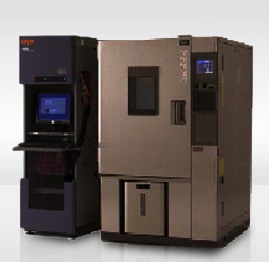
Highly Accelerated Stress Test (HAST): The Complete Guide to Accelerated Humidity Reliability Testing
The Highly Accelerated Stress Test (HAST) is not just a faster alternative to THB it’s a smarter, more aggressive screen for the moisture-related failure mechanisms that plague modern electronics. By leveraging pressurized steam at elevated temperatures, HAST compresses years of environmental aging into days, enabling engineers to catch packaging flaws, material weaknesses, and contamination issues before products ship.
As electronics continue to shrink, operate in harsher environments, and carry greater safety-critical responsibilities from autonomous vehicles to implantable medical devices HAST will remain an indispensable tool in the reliability engineer’s arsenal. When applied correctly, with attention to standards, materials, and failure physics, HAST doesn’t just save time it saves reputations, lives, and millions in warranty costs.
In the relentless pursuit of electronic reliability, moisture remains one of the most insidious enemies. It causes corrosion, delamination, mold growth, and electrochemical migration failures that may take months or years to appear under normal conditions. To compress this timeline, engineers turn to the Highly Accelerated Stress Test (HAST): a powerful, pressure-enhanced humidity test that replicates years of environmental aging in just days.
Unlike traditional 85°C/85% RH testing (THB), HAST uses saturated steam at elevated temperature and pressure to aggressively drive moisture into materials, exposing weaknesses in packaging, molding compounds, and circuit board assemblies far more quickly. This guide explores the principles, standards, applications, and best practices of HAST essential knowledge for semiconductor manufacturers, automotive suppliers, medical device engineers, and electronics reliability professionals.
What Is HAST (Highly Accelerated Stress Test)?
HAST (Highly Accelerated Stress Test) is an accelerated environmental stress test that evaluates the resistance of electronic components and assemblies to high-temperature, high-humidity conditions under elevated pressure. It is defined primarily by the JEDEC standard JESD22-A110.
Key test conditions typically include:
– Temperature: 110°C, 120°C, or 130°C
– Relative Humidity: ~85% to 100% RH (achieved via pressurized steam)
– Pressure: Slightly above atmospheric (to prevent boiling at high temps)
– Duration: 96, 168, or 200 hours (vs. 1,000+ hours for THB)
– Bias: Optional (biased HAST applies voltage; unbiased HAST does not)
The goal: induce moisture-related failures rapidly to screen out weak designs or manufacturing defects before products reach the field.
Why HAST Was Developed
Traditional THB (Temperature-Humidity-Bias) testing at 85°C/85% RH is slow, energy-intensive, and often fails to reveal latent defects in modern, miniaturized components. HAST was developed to:
– Reduce test time by 3–5x
– Better simulate real-world failure modes in plastic-encapsulated devices
– Provide a more aggressive screen for high-reliability applications
How HAST Works: The Science Behind the Stress
Moisture Ingress Mechanisms
Under HAST conditions, moisture penetrates devices through:
– Diffusion through mold compound
– Capillary action along leadframes or vias
– Cracks or delamination paths in packaging
Once inside, moisture enables:
– Electrochemical migration (dendrite growth)
– Corrosion of metal traces and bond wires
– Swelling-induced delamination
– Parameter drift in sensitive circuits
Role of Pressure and Temperature
At 130°C, water would normally boil at atmospheric pressure. HAST chambers use pressurized saturated steam (typically 29.7 psi at 130°C) to keep water in liquid-vapor equilibrium, ensuring 100% RH without boiling. This dramatically accelerates moisture absorption compared to THB.
Acceleration Factor
HAST achieves an acceleration factor of 3–10x over THB, depending on material properties and failure mechanism. For example:
– A 96-hour HAST @ 130°C ≈ 1,000 hours THB @ 85°C/85% RH
– A 200-hour HAST can simulate 2+ years of tropical field exposure
Types of HAST Tests
1. Biased HAST (Standard HAST)
Devices are powered with electrical bias (typically at maximum rated voltage) during the test. This accelerates:
– Ionic contamination-induced leakage
– Electrochemical migration between traces
– Dielectric breakdown in humid environments
Used for: Active components (ICs, transistors, diodes).
2. Unbiased HAST (uHAST)
No electrical bias is applied. Focuses purely on material and packaging integrity.
Used for: Passive components (resistors, capacitors), unpowered PCBAs, or when bias could mask corrosion-related failures.
3. Dynamic HAST (Emerging)
Devices are functionally exercised during HAST to simulate real-world switching under humidity stress useful for power electronics and high-speed digital systems.
HAST vs. Other Environmental Tests
HAST vs. THB (Temperature-Humidity-Bias)
| Parameter | THB | HAST |
|---|---|---|
| Temperature | 85°C | 110–130°C |
| Humidity | 85% RH | ~100% RH (pressurized steam) |
| Pressure | Atmospheric | Elevated (~2 atm at 130°C) |
| Typical Duration | 1,000+ hours | 96–200 hours |
| Acceleration Factor | 1x (baseline) | 3–10x |
HAST vs. Pressure Cooker Test (PCT)
PCT (JESD22-A102) uses 121°C, 100% RH, 2 atm pressure but no electrical bias. It’s a passive test focused on package integrity. HAST is more aggressive for active reliability screening.
HAST vs. HALT/HASS
HALT (Highly Accelerated Life Test) uses extreme thermal cycling, vibration, and rapid transitions to find design limits. HAST is a steady-state humidity test complementary, not competitive.
Industry Standards & Test Conditions
JEDEC JESD22-A110: The Primary HAST Standard
Defines two main test conditions:
- Condition A: 130°C, 85% RH, 20 psig, 96 hours (biased)
- Condition B: 110°C, 85% RH, 14 psig, 200 hours (biased)
Also includes uHAST variants without bias.
AEC-Q100/101/200: Automotive Qualification
Requires HAST or uHAST for:
– Grade 0/1 ICs (130°C ambient): 96h HAST
– Grade 2/3 ICs: 48h or 96h uHAST
– Passive components: uHAST per AEC-Q200
IEC, IPC, and Military Standards
- IEC 60068-2-66: International equivalent of HAST
- IPC-TM-650 2.6.14: Test method for HAST on PCBs
- MIL-STD-883, Method 1004.14: References HAST for microcircuits
Applications by Industry
Semiconductor Manufacturing
HAST is mandatory for qualifying:
– Plastic-encapsulated ICs (QFP, BGA, QFN)
– Power devices (MOSFETs, IGBTs)
– Sensors and MEMS packages
Failure modes detected: wire bond corrosion, mold compound delamination, passivation cracks.
Automotive Electronics
Every ECU, infotainment module, and ADAS sensor must pass HAST per AEC-Q100. Under-hood components face high humidity during car washes, rain, and condensation HAST simulates worst-case scenarios.
Medical Devices
Implantables and external monitors undergo HAST to ensure decades of reliability in human-body-temperature, high-humidity environments. A single corrosion failure could be life-threatening.
Consumer Electronics
Smartphones, wearables, and IoT devices use HAST to validate:
– Conformal coating effectiveness
– Waterproofing seals (IP67/IP68)
– PCB solder mask integrity
Aerospace & Industrial
Satellites, avionics, and factory robots use HAST to screen for long-term reliability in tropical or marine environments.
HAST Test Equipment & Setup
HAST Chamber Components
- Pressure vessel: Stainless steel, rated for 150°C and 35 psi
- Steam generator: Produces saturated steam without impurities
- Temperature/humidity sensors: Calibrated for high-pressure environments
- Electrical feedthroughs: For biased HAST (hermetic, high-temp)
- Safety interlocks: Prevent opening under pressure
Sample Mounting & Fixturing
Devices are mounted on test boards with:
– Gold-plated traces to resist corrosion
– Proper spacing for steam circulation
– Secure electrical connections (for biased HAST)
Poor fixturing can cause false failures due to condensation pooling or poor contact.
Common Failure Modes Detected by HAST
1. Electrochemical Migration (Dendrite Growth)
Moisture + ionic contamination + bias → conductive metal dendrites between traces → short circuits. Common in fine-pitch PCBs.
2. Corrosion of Bond Wires & Metallization
Aluminum or gold bond wires corrode in humid, ionic environments leading to open circuits.
3. Package Delamination
Moisture absorption causes swelling, breaking adhesion between mold compound, die, and leadframe. Often visible via acoustic microscopy post-test.
4. Passivation Layer Cracking
Stress from moisture-induced swelling cracks silicon nitride/oxide layers exposing underlying circuits to contamination.
5. Parameter Drift
Leakage current increase, threshold voltage shift, or gain reduction due to surface conduction on wet die.
Post-Test Analysis & Inspection
Electrical Testing
After HAST, devices undergo:
– Functional test
– Parametric test (IDDQ, leakage, timing)
– Curve tracing (for analog devices)
Physical Failure Analysis
- X-ray inspection: Detect wire bond breaks
- Acoustic Microscopy (SAT): Reveal delamination
- Decapsulation: Expose die for optical/SEM inspection
- Ion Chromatography: Identify ionic contaminants
Best Practices for Effective HAST
1. Choose the Right Test Condition
Don’t default to 130°C/96h. For less aggressive screening, use 110°C/200h. For automotive Grade 0, 130°C is required.
2. Control Ionic Contamination
Clean PCBs and components before HAST. Residual flux or fingerprints will guarantee failure masking true design weaknesses.
3. Validate Chamber Performance
Perform annual calibration with:
– NIST-traceable sensors
– Dummy loads to verify temperature uniformity
– Leak checks on feedthroughs
4. Use uHAST for Passives
Applying bias to resistors or capacitors during HAST can create misleading failure modes. Use unbiased mode instead.
5. Correlate with Field Data
Track HAST pass/fail rates vs. field returns. If HAST-passed units fail in humid climates, your test profile may be insufficient.
Limitations & Pitfalls of HAST
Pitfall 1: Over-Acceleration
Extreme HAST conditions may induce non-field-relevant failures (e.g., mold compound cracking that wouldn’t occur at 60°C). Always validate acceleration models.
Pitfall 2: Ignoring Material Properties
Low-quality mold compounds absorb moisture faster, failing HAST even with good design. Know your materials’ moisture diffusion coefficients.
Pitfall 3: Poor Test Board Design
Traces too close together? Guaranteed dendrite failure. Use test boards that mimic actual product spacing.
When NOT to Use HAST
- Hermetically sealed components (use THB or PCT instead)
- Devices with known moisture sensitivity above test temp
- Early R&D without baseline data
Future Trends in HAST Testing
1. Dynamic HAST with Real Workloads
Future HAST systems will run actual firmware or stress algorithms during humidity exposure simulating real use, not just static bias.
2. In-Situ Monitoring
Embedded sensors will measure leakage current, temperature, and strain during HAST enabling real-time failure prediction.
3. AI-Driven Test Optimization
Machine learning models will recommend optimal HAST duration/temperature based on design, materials, and historical data reducing over-testing.
4. HAST for Advanced Packaging
3D ICs, fan-out wafer-level packaging (FOWLP), and chiplets require new HAST protocols to address interposer and underfill vulnerabilities.
Frequently Asked Questions (FAQ)
What is HAST testing?
HAST (Highly Accelerated Stress Test) is an accelerated reliability test that exposes electronic components to high temperature (110–130°C) and high relative humidity (85–100% RH) under elevated pressure to rapidly induce moisture-related failures such as corrosion, delamination, and electrochemical migration.
What is the difference between HAST and THB?
THB (Temperature-Humidity-Bias) uses 85°C/85% RH at ambient pressure and takes 1,000+ hours. HAST uses higher temperature (e.g., 130°C) and pressure-saturated steam to achieve equivalent stress in just 96–200 hours making it 3–5x faster.
Is HAST the same as uHAST?
No. Standard HAST applies electrical bias during testing. uHAST (unbiased HAST) does not apply voltage, making it suitable for passive components or when bias could mask failure mechanisms.
Which industries use HAST testing?
Semiconductor, automotive, aerospace, medical devices, and consumer electronics industries use HAST to qualify ICs, PCBAs, and components for humidity resistance per standards like JESD22-A110 and AEC-Q100.
Can HAST replace THB completely?
In many cases, yes especially for plastic-encapsulated devices. However, some legacy specs or military standards still require THB. Always verify customer or regulatory requirements before substituting.