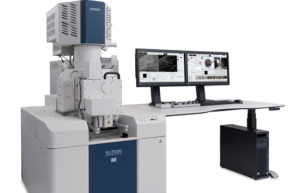
The Scanning Electron Microscope (SEM) has revolutionized the way scientists, engineers, and quality assurance specialists visualize and analyze materials at the micro- and nanoscale. Unlike optical microscopes limited by diffraction, SEM uses a focused beam of high-energy electrons to scan a sample’s surface, generating high-resolution images with exceptional depth of field and enabling a suite of analytical techniques—including secondary electron (SE) and backscattered electron (BSE) imaging, energy dispersive X-ray spectroscopy (EDS), electron backscatter diffraction (EBSD), and cathodoluminescence (CL). However, not all SEM tests are created equal. The optimal SEM configuration, imaging mode, sample preparation protocol, and analytical add-ons depend heavily on your specific material, research question, industry standards, and performance requirements. This in-depth article explores the critical decision factors involved in selecting the right SEM test, from choosing between conventional high-vacuum and environmental modes to determining beam energy, detector types, and correlative workflows. Whether you’re analyzing fracture surfaces in aerospace alloys, mapping nanoparticle distributions in biomedical scaffolds, or performing failure analysis on semiconductor devices, this guide will empower you to design a precise, efficient, and scientifically robust SEM testing strategy tailored to your needs.
Understanding SEM Fundamentals and Imaging Modes
At its core, SEM operates by rastering a finely focused electron beam across a sample surface. Interactions between the beam and the specimen generate various signals: secondary electrons (SE) for topographical contrast, backscattered electrons (BSE) for atomic number (compositional) contrast, characteristic X-rays for elemental analysis (via EDS), and diffracted electrons for crystallographic orientation (via EBSD). The choice of which signal to detect—and under what conditions—forms the basis of your SEM test selection. Secondary electron imaging, captured by an Everhart-Thornley detector, delivers the iconic 3D-like SEM images with nanometer-scale resolution, ideal for examining surface morphology, cracks, pores, or biological structures. In contrast, BSE imaging, collected by solid-state annular detectors, reveals differences in average atomic number: brighter regions correspond to heavier elements. This mode is invaluable for distinguishing phases in multiphase alloys, identifying inclusions in steels, or visualizing dopant distributions in semiconductors. Selecting between SE and BSE—or combining both—is often the first critical decision in test design.
Key Factors in Selecting an SEM Test Protocol
Sample Type and Conductivity
Perhaps the most decisive factor in SEM test selection is the nature of your sample. Conductive materials like metals and graphite can be imaged directly in high-vacuum mode with minimal preparation. However, non-conductive specimens—such as polymers, ceramics, biological tissues, or geological samples—tend to accumulate charge under the electron beam, causing image distortion, streaking, or complete signal loss. To mitigate this, you have several options: (1) apply a thin conductive coating (e.g., 5–10 nm of carbon or gold/palladium); (2) use low-vacuum or variable-pressure SEM (VP-SEM), where gas molecules (typically water vapor or nitrogen) ionize to neutralize charge; or (3) employ low-kilovolt (low-kV) imaging (≤5 kV), which reduces charging by limiting electron penetration. Each approach has trade-offs: coating may obscure fine surface details or interfere with EDS; VP-SEM offers lower resolution due to beam scattering; and low-kV imaging sacrifices signal-to-noise ratio. Your test selection must balance resolution needs with sample integrity.
Required Resolution and Magnification Range
Resolution—the smallest distinguishable feature—is governed by electron source type, beam energy, and detector efficiency. Thermionic sources (e.g., tungsten or cerium hexaboride [CeB₆]) offer 3–6 nm resolution and are cost-effective for routine industrial use. Field emission guns (FEG-SEM), using cold or Schottky emitters, provide sub-nanometer resolution (<1 nm) and are essential for nanotechnology, semiconductor metrology, and advanced materials research. If your work involves imaging nanoparticles, grain boundaries in thin films, or fine fracture features, FEG-SEM is likely necessary. Conversely, for general quality control of machined parts or coating thickness verification, a conventional tungsten-gun SEM may suffice. Additionally, consider your magnification needs: while SEMs can reach 1,000,000x, useful magnification is limited by resolution and signal quality. Always match magnification to your analytical goal—excessive zoom without sufficient signal yields empty enlargement.
Need for Elemental or Crystallographic Analysis
If your objective extends beyond imaging to compositional or structural characterization, your SEM test must integrate analytical detectors. For elemental identification and mapping, an Energy Dispersive X-ray Spectrometer (EDS) is standard. Select an EDS system with a large-area silicon drift detector (SDD) for high count rates and fast mapping. For crystallographic orientation, phase identification, or grain boundary analysis, Electron Backscatter Diffraction (EBSD) is indispensable—but requires a highly polished, strain-free sample surface and precise stage control. Some advanced workflows combine EDS and EBSD for correlative microstructure-composition analysis. If you’re studying luminescent materials (e.g., phosphors, minerals, or LEDs), a cathodoluminescence (CL) detector may be needed. Before selecting a test, clarify whether you require qualitative imaging only or quantitative multimodal data—this determines instrument configuration and preparation rigor.
Operational Modes: High Vacuum, Low Vacuum, and Environmental SEM
High-Vacuum Mode: Maximum Resolution for Stable Samples
High-vacuum SEM (typically <10⁻³ Pa) provides the highest resolution and signal stability by eliminating gas molecules that would scatter the electron beam. It is ideal for dry, solid, conductive samples like metals, semiconductors, and coated specimens. However, it cannot accommodate wet, oily, or outgassing materials without extensive preparation (e.g., critical point drying for biological samples). If your samples are robust and stable under vacuum, high-vacuum mode delivers the best image quality and analytical precision for EDS/EBSD.
Variable-Pressure (Low-Vacuum) and Environmental SEM (ESEM)
Variable-pressure SEM (10–250 Pa) and Environmental SEM (ESEM, up to 4,000 Pa with water vapor) allow imaging of uncoated, non-conductive, or even hydrated samples by using gas ionization to dissipate charge. ESEM can observe dynamic processes like hydration, drying, or crystallization in real time—revolutionary for life sciences, soil science, and food research. However, resolution is reduced (typically 5–20 nm) due to beam broadening in gas. If your samples cannot be dried or coated—such as plant tissues, hydrogels, or forensic evidence in native state—ESEM or VP-SEM is the only viable option, even at the cost of ultimate resolution.
Sample Preparation: The Hidden Determinant of Success
Metallographic Preparation for Polished Samples
For quantitative EBSD or high-resolution imaging of metals and ceramics, samples must be mirror-polished using sequential grinding, polishing, and often electropolishing or ion milling to remove surface deformation. Any residual scratches or embedded particles will dominate the signal and obscure true microstructure. This preparation is labor-intensive but non-negotiable for crystallographic studies.
Biological and Soft Matter Preparation
Biological specimens require fixation (e.g., glutaraldehyde), dehydration (via ethanol series), and drying (critical point drying or freeze-drying) to preserve morphology. Alternatively, cryo-SEM—where samples are frozen and fractured under vacuum—enables imaging of hydrated structures in near-native state. For polymers, gentle sputter coating with iridium or platinum may be preferred over gold to minimize grain size and preserve nanoscale features.
Industry-Specific SEM Test Selection
Electronics and Semiconductor Industry
In microelectronics, SEM tests focus on defect localization, linewidth metrology, via inspection, and contamination analysis. Low-kV imaging (1–2 kV) minimizes beam damage to delicate structures, while high-resolution FEG-SEM with EDS identifies metallic residues or solder voids. Automated defect review (ADR) systems integrate SEM with pattern recognition for high-throughput yield analysis in wafer fabs.
Metallurgy and Failure Analysis
Metallurgists use BSE imaging to reveal phase distributions and EDS to identify inclusions or corrosion products. Fractography—imaging fracture surfaces to determine failure mode (ductile, brittle, fatigue)—relies on SE imaging at multiple magnifications. Cross-sectional analysis of welds or coatings often requires precision cross-sectioning and polishing before SEM.
Geology and Mining
Geoscientists employ BSE imaging to distinguish mineral phases based on atomic number contrast, coupled with EDS for rapid mineral identification. Automated mineralogy systems (e.g., QEMSCAN, MLA) combine SEM with EDS mapping to quantify mineral liberation and texture in ore samples—critical for processing optimization.
Frequently Asked Questions (FAQ)
What’s the difference between SEM and TEM, and how do I choose?
Scanning Electron Microscopy (SEM) scans the surface of bulk samples to produce 3D-like topographical images with resolution down to ~1 nm, suitable for microstructural and compositional analysis. Transmission Electron Microscopy (TEM) transmits electrons through an ultra-thin specimen (<100 nm thick) to achieve atomic-scale resolution (0.1 nm) and reveal internal crystal defects, lattice fringes, and nanoparticle cores. Choose SEM for surface morphology, fracture analysis, or bulk elemental mapping; choose TEM for crystallography, dislocation analysis, or nanoparticle internal structure. Sample preparation for TEM is far more complex and time-consuming, so SEM is preferred for routine or high-throughput screening.
Can I image wet or biological samples without coating?
Yes, but only with specific SEM configurations. Standard high-vacuum SEM requires dry, conductive samples. However, Environmental SEM (ESEM) or variable-pressure SEM (VP-SEM) allows uncoated, hydrated, or oily samples by introducing water vapor or nitrogen into the chamber to neutralize charging. ESEM can even image dynamic processes like evaporation or swelling. Alternatively, cryo-SEM—where samples are frozen rapidly and imaged at cryogenic temperatures—preserves native hydrated structures without coating. These techniques sacrifice some resolution but enable analysis impossible in conventional SEM.
How do I decide between tungsten, CeB₆, and FEG electron sources?
The electron source directly impacts resolution, brightness, and operational cost. Tungsten (W) filaments are inexpensive and robust but offer limited resolution (~3–6 nm) and short lifetime (~100 hours). Cerium hexaboride (CeB₆) cathodes provide 2–3x brighter beam, better resolution (~1.5–3 nm), and longer life (~1,500 hours) at moderate cost—ideal for industrial labs needing reliability. Field Emission Gun (FEG) sources (cold or Schottky) deliver the highest brightness and sub-nanometer resolution (<1 nm), essential for nanotechnology and semiconductor metrology, but require ultra-high vacuum and have higher acquisition and maintenance costs. Choose W for basic QC, CeB₆ for general research, and FEG for cutting-edge nanoscale work.
Is EDS always necessary with SEM?
No. Many SEM applications require only high-resolution imaging—such as surface roughness assessment, particle size distribution, or fracture mode identification—where EDS adds unnecessary cost and complexity. However, if you need to identify unknown particles, verify material composition, map elemental distributions, or perform contamination analysis, EDS is indispensable. Some modern SEMs offer modular designs, allowing EDS to be added later. Consider your primary use case: if >50% of your work involves “what is this material?” questions, integrate EDS from the start.
How long does SEM sample preparation take?
Preparation time varies dramatically by sample type. Conductive metals may require only cleaning (5–10 minutes). Non-conductive powders or ceramics need mounting, polishing, and carbon coating (1–2 hours). Biological tissues demand fixation, dehydration, drying, and sputter coating (4–24 hours). For EBSD, metallographic polishing with final ion milling can take 6–12 hours to achieve deformation-free surfaces. Cryo-SEM sample prep is faster (minutes) but requires specialized freezing equipment. Always factor preparation time into your experimental timeline—often, it dominates over actual SEM acquisition time.
Selecting the right SEM test is not merely about choosing a microscope—it’s about aligning instrument capabilities, operational parameters, and sample preparation rigor with your scientific or industrial objective. By systematically evaluating your material properties, required resolution, analytical needs, and environmental constraints, you can design an SEM workflow that delivers actionable insights with maximum efficiency and minimal artifacts. As SEM technology continues to evolve—with faster detectors, smarter automation, and deeper correlative capabilities—the ability to make informed test selections will remain a cornerstone of advanced materials characterization across disciplines.